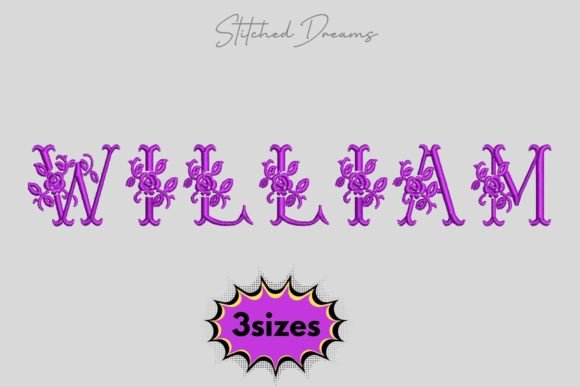
William Name Embroidery Design
A Sophisticated First Impression for Craft Fair Buyers
Walking up to my booth, a customer’s eye lands on clean, confident lettering—not flashy, not fussy—just quietly elegant. That’s the immediate impact of the William Name Embroidery Design. It reads as classic, refined, and timeless—not trendy or thematic—making it instantly versatile across kitchen and lifestyle products. It doesn’t shout “farmhouse” or “modern minimalist,” but lands somewhere beautifully in between: polished enough for a boutique apron, warm enough for a linen tea towel, and distinguished enough to feel like a meaningful handmade gift. For craft fair shoppers scanning dozens of booths in under 90 seconds, that quiet confidence is gold.
Where William Name Embroidery Design Shines On Real Products
This design isn’t just legible—it’s noticeable at arm’s length and desirable up close. Here’s how it performs across key craft fair and handmade market items:
- Tote bag design: Centered on a natural canvas tote, “William” reads clearly even from three feet away—ideal for personalization without overwhelming the bag’s structure.
- Apron embroidery: Placed above the pocket or centered on the bib, it adds heirloom-level charm to a functional kitchen item. The classic font avoids looking juvenile or overly formal—perfect for chefs, bakers, and home cooks alike.
- Tea towel embroidery: Works exceptionally well on medium-weight linen or cotton towels. The letter spacing holds up against fabric texture, and the design scales gracefully whether stitched small (4.5") or generously (7")—no crowding or thinning out.
- Embroidered patch: Clean lines and balanced proportions make it an excellent candidate for iron-on or sew-on patches—ideal for jackets, backpacks, or kids’ lunchboxes.
- Fabric pouches & pillow covers: Holds visual weight without dominating smaller surfaces. Especially effective on neutral-toned fabrics where thread contrast can be maximized.
- Caps & curved surfaces: Proceed with caution—tight curves compress letterforms. Test on scrap first; best suited for structured caps with flat front panels, not soft unstructured ones.
Practical Production Notes Every Embroidery Designer Should Check
Before cutting fabric or loading hoops, run these checks—especially when prepping for batch production or a high-traffic craft fair weekend:
- Test the design on scrap fabric matching your final product (e.g., terry cloth for towels, duck canvas for totes).
- Check thread contrast—“William” relies on clarity, not density. Light thread on dark fabric? Dark thread on oatmeal linen? Always test.
- Review spacing and kerning—the classic font likely features intentional letter spacing. Don’t shrink it below 3.5" without verifying readability.
- Confirm hoop size compatibility—if your machine uses a 4x4 hoop, ensure the full name fits comfortably within that frame, especially if adding a subtle border or monogram flourish later.
- Inspect stitch density—names with tight serifs or delicate terminals can trap thread or cause puckering on lightweight fabrics. A medium-density file will serve most kitchen and lifestyle applications best.
- Use the right stabilizer—cutaway for stretchy knits, tear-away for stable wovens like tea towels and aprons. Skip fusible web alone—it won’t support crisp lettering.
- Create at least one real mockup before ordering 50 tea towels. See how it photographs in natural light—and how it feels in hand.
- Compare fabric colors—a cream thread on beige linen may vanish; navy on charcoal might read as solid shape rather than text. Prioritize contrast over “matching.”
- Confirm commercial licensing before selling finished products. As an Etsy seller or small shop product owner, you need assurance this digital embroidery file permits resale of embroidered goods.
What This Design Does for Your Booth—and Your Brand
The William Name Embroidery Design strengthens your booth display by offering instant recognition and emotional resonance. Unlike abstract motifs or seasonal themes, a name carries warmth, intention, and personal connection—key drivers for handmade buyers. At a craft fair, it draws parents looking for personalized baby gifts, couples shopping for wedding kitchen sets, and professionals seeking elevated workwear (think chef aprons or barista totes). It also supports brand consistency: use it across multiple product types—tea towel + matching pouch + embroidered cap—and customers begin to associate your booth with thoughtful, cohesive craftsmanship.
Careful-Use Considerations for Best Results
While elegant, this machine embroidery design has boundaries. Avoid stitching it:
- Below 3" tall on textured towels—tiny serifs and fine strokes blur into the loops.
- On thick, napped fabrics like heavy fleece or quilted cotton—stitch definition suffers without aggressive stabilizing.
- Directly over seams or darts—distortion pulls letters out of alignment.
- Without adjusting tension for dark thread on dark fabric—what looks sharp on screen may read as muddy in person.
- As a standalone focal point on oversized items (like 20" pillow covers) unless scaled up proportionally—small names feel lost, not minimalist.
Final Thought: Why This Belongs in Your Digital Design Assets
For the Etsy seller juggling listings, the embroidery business owner batching orders, or the boutique maker curating a holiday kitchen collection—the William Name Embroidery Design delivers reliable return on effort. It photographs beautifully for printable mockups, converts well in online listings (searches for “personalized kitchen gift” and “embroidered name towel” align naturally), and feels premium without requiring complex digitizing. It’s not a novelty—it’s a foundational embroidery file. When paired with quality fabric, smart thread choices, and intentional placement, it transforms a simple tote bag into a keepsake and a plain apron into a signature piece. In a crowded handmade market, that kind of quiet distinction is exactly what sells.