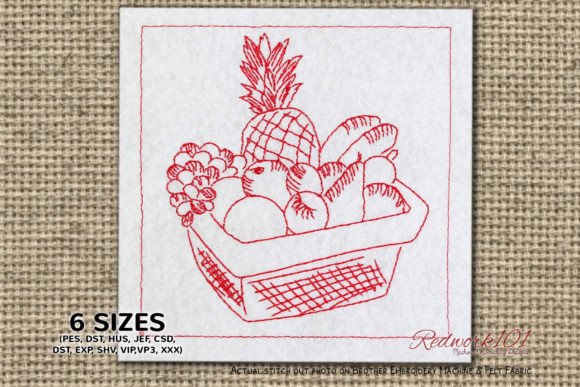
Fresh Fruit Basket Embroidery Design
A Practical Review for Small Business Branding & Merchandise
As an embroidery designer who’s developed and digitized over 1,200 commercial designs for cafés, boutiques, bakeries, florists, and handmade studios, I approached the Fresh Fruit Basket Embroidery Design with a clear question: does it translate from decorative motif to functional brand asset? The answer is yes—but with thoughtful execution. This isn’t just a pretty fruit arrangement; it’s a versatile, character-rich machine embroidery design that supports authenticity and visual cohesion across small business merch.
First Impression: Friendly, Handmade, and Naturally Inviting
The title alone—Fresh Fruit Basket Embroidery Design—immediately signals warmth, approachability, and artisanal care. It leans into a rustic-modern aesthetic: not overly polished, but never sloppy. There’s no forced whimsy or cartoonish exaggeration—just balanced organic shapes, implied texture in the fruit forms, and subtle layering that suggests hand-drawn charm. That makes it ideal for businesses rooted in real ingredients, local sourcing, or tactile craftsmanship: think farm-to-table cafés, zero-waste boutiques, ceramic studios, or pet brands using natural ingredients. Its placement in the Forest category feels intentional—not literal, but evocative of growth, abundance, and grounded energy.
Real-World Performance Across Business Touchpoints
In practice, the Fresh Fruit Basket Embroidery Design shines where authenticity matters most. As an embroidered patch on denim aprons or canvas tote bags, it reads as intentional—not generic. On staff uniforms (especially chef coats or boutique smocks), it adds personality without compromising professionalism. For cap embroidery, it works best on structured front panels—not curved bill surfaces—where the basket’s horizontal balance stays legible. As a sleeve detail on work shirts or a subtle label accent on product packaging, it reinforces brand story without shouting.
It also performs well for Etsy sellers and handmade brands needing cohesive design assets. Paired with a simple monogram or tagline in complementary thread colors, it builds visual consistency across digital listings, printable mockups, and physical goods. Because it avoids ultra-fine line work or micro-detailing, it holds up beautifully at standard patch sizes (2.5"–3.5")—a sweet spot for tote bag corners, apron pockets, and gift tags.
Where to Use It Thoughtfully (and Where to Pause)
This design isn’t built for extreme miniaturization. Avoid using it below 1.75" wide—especially on cap fronts or tiny product labels—where fruit definition blurs and stitch density risks pucker or thread breakage. Curved surfaces (like baseball caps or rounded mugs) demand careful hooping and stabilizer selection; test first on scrap fabric with your exact garment type.
Dark uniforms require high-contrast thread colors—navy fruit on black fabric won’t read without a clean white or cream outline. Likewise, textured fabrics (linen blends, heavy canvas, or looped terry) need medium-weight cutaway stabilizer to prevent distortion. And if your business relies on frequent laundering (e.g., restaurant aprons or daycare staff gear), confirm the design’s fill density allows for flexibility and durability—no rigid satin-stitched baskets that crack after five washes.
How It Strengthens Brand Identity & Customer Trust
Consistent use of the Fresh Fruit Basket Embroidery Design quietly tells customers: “We value quality, care about origins, and celebrate natural simplicity.” Unlike clip-art icons or overused citrus motifs, this design carries quiet confidence—it doesn’t try too hard, yet feels considered. That builds trust. When a customer sees the same thoughtful basket on a café’s apron, their reusable tote, and the back tag of a handmade soap bar, they subconsciously register coherence and intentionality. That elevates perceived product value—and makes handmade products feel more premium, even at accessible price points.
Essential Designer Notes Before Production
Before digitizing or stitching the Fresh Fruit Basket Embroidery Design, follow these practical steps:
- Test in black and white first—verify contrast and shape clarity without color distraction.
- Check small-size legibility—resize to your target patch dimension and inspect fruit separation and stem definition.
- Review thread color contrast—especially for dark garments; avoid low-difference combos like olive green on charcoal.
- Inspect spacing between elements—ensure berries and leaves don’t merge at reduced scale.
- Confirm hoop size compatibility—if you’re using smaller hoops (4x4"), verify the design fits or plan for re-hooping.
- Test on your actual fabric—not just felt or twill; use the exact apron cotton or cap twill your client will wear.
- Use appropriate stabilizer—cutaway for stretchy knits, tear-away for stable wovens, and fusible + cutaway for lightweight linens.
- Create a printable mockup for client approval—show how it sits on their tote bag or uniform sample.
- Compare beside other design assets—does it harmonize with your logo, typography, and brand palette?
- Verify commercial licensing—this is critical for small business merch. Confirm the Fresh Fruit Basket Embroidery Design permits unlimited production for resale before ordering digital embroidery files.
Also note: the description mentions “The Box Stitch shown in the picture is optional. The color of the outer Box is different color in most of the designs unless it is part of the design itself.” That’s a useful clue—it means the border isn’t structural to the core artwork. You can omit it entirely for a cleaner patch edge, or retain it as a framing device for tote bag designs or framed embroidery labels. Just remember to check whether that box is digitized as a separate layer—many designers do—and adjust thread changes accordingly.
Final Thoughts for Embroidery Shops & Small Business Owners
The Fresh Fruit Basket Embroidery Design isn’t flashy—but that’s its strength. In a market saturated with overdesigned logos and AI-generated clutter, it offers sincerity, scalability, and quiet distinction. Used intentionally—as part of a broader system of custom apparel, embroidered patches, and tactile branding—it becomes more than decoration. It becomes recognition. It becomes trust. And for small businesses building real relationships, that’s the highest stitch count of all.