Family, Love Heart Embroidery Design
First Impression: Warm, Timeless, and Booth-Ready
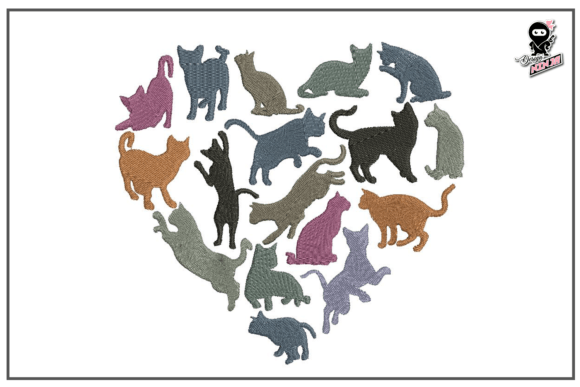
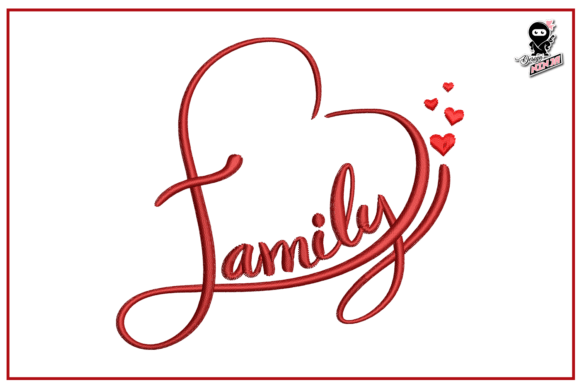
As an embroidery designer who’s prepped over 200 craft fair booths, my first take on Family, Love Heart Embroidery Design is immediate and positive: it reads as heartfelt, inclusive, and quietly confident—not cutesy, not cluttered, not overly ornate. It lands somewhere between modern farmhouse and soft contemporary, with enough emotional resonance to stop a shopper mid-aisle. That “love heart” element suggests warmth and sincerity, while “family” grounds it in universal appeal—no niche age group, no specific family structure required. For handmade market sellers, that versatility is gold.
Where This Design Shines In Real-World Craft Fair Products
This machine embroidery design performs strongest when placed where emotion meets utility. On a natural linen tote bag design, centered just below the top seam, it reads clearly from six feet away—clean lines, balanced negative space, and a shape that draws the eye without shouting. As apron embroidery, it works beautifully above the pocket or centered on the bib, adding personality without overwhelming function. For tea towel embroidery, it holds up even on textured cotton terry—especially if stitched with a lightweight cutaway stabilizer and slightly reduced stitch density in the heart curve.
It also translates exceptionally well to embroidered patch format: small enough for lapel placement on denim jackets or kids’ backpacks, yet detailed enough to feel intentional and handmade. On pillow covers and fabric pouches, it adds quiet luxury—particularly when paired with tonal thread colors (e.g., blush pink thread on oatmeal linen). And yes—it’s strong enough for commercial embroidery on caps, but only if scaled appropriately and tested on curved surfaces first.
What Makes It Sell on Etsy and at Handmade Markets
Family, Love Heart Embroidery Design checks three critical boxes for Etsy sellers and small shop product makers: it’s emotionally resonant, visually legible at thumbnail size, and adaptable across categories. As a digital embroidery file, it supports multiple applications without needing redesign—meaning one purchase fuels your entire booth lineup: tote bags, aprons, patches, pouches, and more. Its clean silhouette photographs beautifully in natural light, making printable mockups compelling and your online listings instantly cohesive.
Customers don’t just buy a handmade product; they buy meaning—and this design delivers that without cliché. It feels personal but not private, sentimental but not saccharine. That balance makes it easy to upsell (“Add a matching embroidered tea towel!”) and cross-merchandise (“Pair with our ‘Home Is Where the Heart Is’ pillow cover!”).
Design Practicality: Batch-Friendly, Not Fussy
This isn’t a finicky embroidery file. No micro-lettering, no nested satin stitches under 2mm, no dense fill areas that risk puckering on lightweight fabrics. It scales cleanly from 3.5” to 6”, maintaining clarity at both ends. That means you can produce consistent craft fair product runs without constant recalibration. You’ll get reliable results on standard home embroidery machines—even older models—provided you use appropriate stabilizer and match thread colors thoughtfully.
Careful-Use Notes Every Designer Should Know
Even warm, simple designs have limits. Here’s what to watch:
- Dense stitch areas: The heart outline may compress on thick fabrics like canvas or heavy twill—test with medium-weight tear-away + light cutaway combo.
- Small lettering: If the design includes script-style “Family” text, avoid scaling below 4”—legibility fades fast on textured towels or curved cap fronts.
- Dark fabric: Use high-contrast thread (e.g., cream on navy) and consider adding a white underlay stitch layer if your machine supports it.
- Fabric texture: Avoid ultra-napped fleece or bouclé—those fibers swallow fine details. Stick to smooth cotton, linen blends, or medium-weave denim.
- Hoop size: Confirm the largest version fits your most-used hoop before cutting production fabric.
How It Elevates Your Booth, Brand, and Buyer Connection
In a sea of glitter, florals, and trendy fonts, Family, Love Heart Embroidery Design stands out by being grounded. It strengthens your booth display strength because it pairs effortlessly with neutral palettes—think oatmeal, charcoal, sage, and terracotta—letting your craftsmanship, not the design, take center stage. It reinforces brand consistency across product types without demanding a rigid aesthetic.
Most importantly, it sparks buyer engagement. Shoppers linger, point, say “That’s us,” or ask, “Can you do it with my kids’ names?” That’s the moment a casual browse becomes a sale—and possibly a repeat customer. As a finished product, it feels premium not because it’s flashy, but because it’s sincere, well-executed, and made with intention.
Essential Embroidery Designer Notes Before You Stitch
- Always test the design on scrap fabric—same type, same color, same stabilizer stack you’ll use for production.
- Check thread contrast under booth lighting: what looks great on screen may vanish in afternoon sun or market tent shadows.
- Review spacing between letters and heart elements—tight gaps can close up on stretchy or loosely woven fabrics.
- Inspect stitch density in the heart curve; adjust tension or reduce density slightly if your machine flags skipped stitches.
- Confirm commercial licensing before selling finished products—this is non-negotiable for digital embroidery file users.
- Create at least one real mockup (not just digital)—a stitched tote bag tells you more than ten printable mockups ever could.
- Compare how it reads across fabric colors—light vs. dark, solid vs. subtle stripe—to guide your booth palette decisions.
Final Thought: A Quiet Anchor for Your Creative Business
Family, Love Heart Embroidery Design isn’t a trend-chaser—it’s a steady, sellable anchor. It fits seamlessly into the Family Quotes category without leaning into kitsch, and it honors the Embroidery craft by prioritizing stitch integrity over visual noise. Whether you’re building a boutique brand, launching your first Etsy shop, or expanding your craft fair lineup, this machine embroidery design earns its place—not because it’s loud, but because it’s true.