Eagle Embroidery Design Review
First Impression: Bold, Timeless, and Brand-Ready
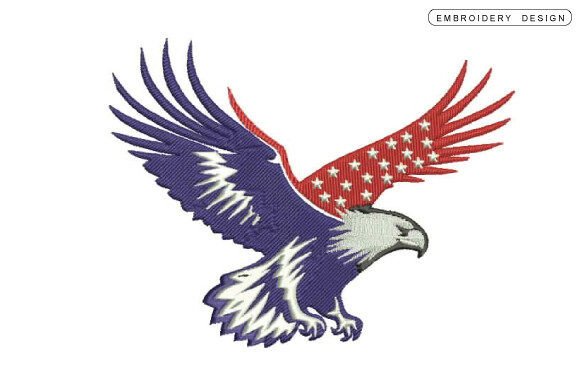
As an embroidery designer who’s digitized over 2,000 commercial projects for small businesses—from artisanal bakeries to outdoor gear startups—I immediately recognize the Eagle Embroidery Design as more than a seasonal motif. Its title signals strength and independence, but its real value lies in execution: this isn’t just a decorative eagle—it’s a brand-ready machine embroidery design built for versatility. The description highlights Independence Day use, yes—but what stands out is the emphasis on adaptability across pillows, tote bags, jackets, and framed artwork. That tells me it was conceived with scale, clarity, and context in mind—not just holiday appeal.
Real-World Business Performance Across Merch Channels
For small business owners and embroidery shops, the Eagle Embroidery Design delivers where it counts: consistency across touchpoints. On staff aprons? It reads cleanly at 3.5 inches wide—ideal for chest placement without overwhelming handmade product packaging or café counter displays. As an embroidered patch for a local florist’s denim jacket line? It holds structure and presence, especially when backed with medium-weight fusible stabilizer. For cap embroidery? The eagle’s wing span and head profile translate well to curved front panels—if digitized with proper underlay and reduced stitch density in fine feather areas.
It shines brightest on tote bag design and custom apparel meant for repeat visibility: think boutique merchandise, farmer’s market giveaways, or Etsy branding kits. Because the design avoids excessive interior detail (no micro-feathers or nested outlines), it resists “stitch bleed” on textured canvas or cotton twill—critical for work shirts and reusable bags that endure frequent washing. As a sleeve detail on uniforms for a pet brand or creative studio, it adds quiet authority without shouting. And unlike overly ornate eagles, this one doesn’t compete with typography—making it perfect beside a shop name or tagline in printable mockups.
Where to Use It Thoughtfully—Not Everywhere
Even strong designs have boundaries. The Eagle Embroidery Design should be used carefully on small patch sizes under 2 inches: fine beak or talon definition may collapse without precise digitizing. Cap fronts demand extra attention—test it on a real curved bill with your standard bobbin thread and backing; some versions of eagle motifs lose legibility when stretched. Avoid placing it directly over seams or high-movement zones (like elbow joints) unless the file includes strategic stop points or reduced density zones.
Dark uniforms? Confirm thread color contrast—especially if the original digital embroidery file defaults to navy or charcoal thread on black fabric. Also verify spacing between elements: tight wing-to-body gaps can trap lint or distort on heavy fabrics like duck cloth. If your client uses performance blends or recycled polyester, run a test on the actual fabric with recommended stabilizer—some eagle files over-stitch outer contours, causing puckering on stretchy or slick surfaces.
How It Strengthens Brand Identity & Customer Trust
In merch-driven industries—think cafés, boutiques, studios—the Eagle Embroidery Design does double duty: it signals craftsmanship while anchoring brand identity. Unlike clipart-style icons, a well-executed eagle implies intention, heritage, and reliability—traits customers subconsciously associate with professionalism and care. When stitched onto an apron for a handmade soap brand or embroidered patch for a local brewery’s taproom staff, it elevates perceived product value. Customers notice the weight of the thread, the crispness of the outline, the balance of negative space—and that builds trust faster than any tagline.
Consistency matters too. Used alongside other design assets—like a simple wordmark or icon set—the eagle becomes a visual anchor. It supports cohesive storytelling across tote bag design, cap embroidery, and even product packaging accents (e.g., stitched tags on gift boxes). For Etsy sellers and crafters, that cohesion translates directly to buyer engagement: shoppers return to shops with recognizable, tactile branding. And because it’s rooted in classic symbolism—not fleeting trends—the Eagle Embroidery Design won’t date your small business merch in six months.
Practical Designer Notes Before You Stitch
Before committing to production, here’s what I always do—and recommend you do—with the Eagle Embroidery Design:
- Test it in black and white first. Print the outline at actual size to assess proportion and flow—no color distraction.
- Check small patch viability. Resize it down to 1.75" and inspect key features: is the eye still readable? Do wings retain separation from the body?
- Review thread color contrast. Try it in gold, navy, and cream on your most common base fabrics—light and dark.
- Inspect spacing and density. Zoom into the beak, wingtips, and tail feathers. Are there overlapping stitches that could cause bulk or breakage?
- Confirm hoop size compatibility. Does it fit comfortably within your standard 4x4 or 5x7 hoop—or will it require re-hooping mid-stitch?
- Test on real fabric. Run a sample on your go-to tote bag canvas *and* your most-used uniform twill—then wash and dry it once.
- Use proper stabilizer. Medium-cutaway works best for caps and structured patches; tear-away suffices for lightweight totes and pillows.
- Create a client-approved mockup. Embed the design in a realistic photo of their actual product—not just a generic template.
- Compare it beside existing design assets. Does it harmonize with your logo, fonts, and color palette—or clash visually?
- Confirm commercial licensing. Since this is intended for small business merch and branded patch use, ensure the digital embroidery file permits commercial embroidery and resale of finished product.
Remember: the Eagle Embroidery Design isn’t just about stitching an image—it’s about embedding confidence, recognition, and authenticity into every piece of custom apparel and branded patch your business produces. When executed thoughtfully, it becomes part of your story—not just decoration.