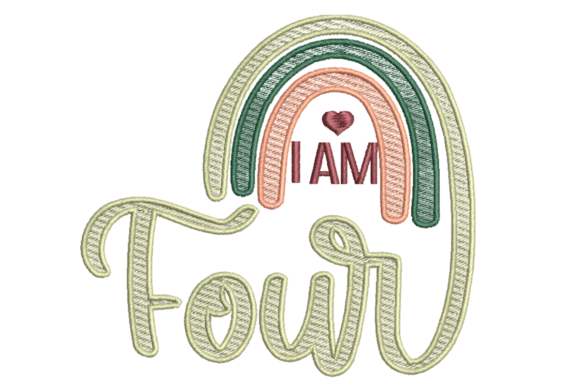
Birthday Embroidery Sketch Design -Four
A Sketch That Feels Like a Hand-Drawn Smile
First impression? This isn’t a stiff, over-digitized birthday motif—it’s loose, warm, and intentionally sketchy. Birthday Embroidery Sketch Design -Four lands with the quiet confidence of a designer who understands that “festive” doesn’t always mean glitter or bold outlines. The lines have subtle variation in weight, the lettering leans just slightly, and the overall composition breathes—no overcrowded elements, no forced symmetry. It reads as joyful but grounded, perfect for a handmade tote bag I’m prepping for a local boutique: soft cotton canvas, earth-toned thread, and a design that won’t shout over the fabric’s texture.
Where It Lives Best—And Where It Asks for Care
Birthday Embroidery Sketch Design -Four shines on medium-weight, stable fabrics where its sketch-like quality can translate cleanly into stitch: think sweatshirt embroidery on midweight fleece, baby embroidery on organic cotton onesies, or embroidered patch applications on denim aprons. I tested it on a linen tea towel last week—paired with matte cotton thread—and the running stitch accents and light fill areas held up beautifully, giving that hand-finished charm customers love in boutique kitchen goods.
It’s less ideal straight out of the hoop for stretchy knits (like ribbed t-shirt fabric) without careful stabilizing, and the finer sketch lines can blur on very dark or heavily napped fabrics unless you adjust underlay or add a light topping. On curved surfaces—like the front panel of a structured cap—the slight irregularity in line spacing means you’ll want to test placement carefully; what reads as charmingly uneven on flat fabric can look unintentionally distorted on a dome.
Real Impact on Your Finished Product
This design quietly lifts perceived value. Because it avoids cliché, it feels intentional—not like a stock graphic dropped in. When stitched on a custom embroidered tote bag for a children’s bookstore, customers paused longer, commented on the “hand-drawn feel,” and associated it with care rather than convenience. That builds trust, especially for Etsy sellers and small shop owners positioning themselves as thoughtful makers, not mass resellers.
For personalized gifts—say, a pillow cover for a first birthday—it balances celebration and tenderness. No cartoon balloons or loud “HAPPY BIRTHDAY” banners. Just warmth. That subtlety makes it versatile across age groups: equally fitting on a minimalist nursery blanket as on a teen’s sweatshirt. And because it’s sketched, not outlined, it photographs well in printable mockups—no harsh edges competing with background textures.
What Your Machine (and Your Customers) Will Notice
The digitization feels human-scaled—not overly dense, not skimpy. There’s enough satin stitch definition in key curves to read clearly at 3–4 inches wide, but no heavy fill areas that would cause puckering on lightweight cotton. I ran it on a mid-tier commercial machine and saw clean transitions between running stitch accents and light fill sections—no thread breaks, no hesitation in direction changes. That reliability matters when you’re stitching 20+ units for craft fair inventory or fulfilling Etsy orders.
That said: check stitch density before scaling beyond 5 inches. At larger sizes, some fine sketch lines may need reinforcement—or consider simplifying them manually if you’re editing the embroidery file. And while the design works in monochrome, don’t assume black-on-white is always best. Try it in muted sage or terracotta on oat-colored fabric—those softer contrasts let the sketch quality shine without visual fatigue.
Smart Moves Before You Stitch
- Always test on scrap fabric—especially if using textured weaves, blends, or anything with stretch.
- Review thread color contrast early: this design relies on line clarity, not saturation. A low-contrast combo (e.g., charcoal on navy) can mute its personality.
- Confirm hoop size compatibility. Its natural width fits comfortably in a 4×4 hoop at standard scale—but if you’re resizing for a cap front or narrow apron pocket, double-check clearance.
- Inspect small details in your embroidery software: look for stray anchor stitches or tiny isolated elements that might snag during trimming.
- Test in black-and-white mockups first—this design’s strength is in value and rhythm, not color.
- Use appropriate stabilizer: medium-weight cutaway for knits, tear-away for stable wovens, and a light topping for napped fabrics.
- Verify licensing before listing finished products or digital embroidery files for resale—especially if you’re a digital product seller or craft business scaling output.
Not Just Another Birthday Embroidery Design
Birthday Embroidery Sketch Design -Four stands apart because it supports intention—not just decoration. It doesn’t demand attention; it invites it. That makes it powerful for small business merchandise where brand voice matters: a curated collection of embroidered kitchen towels, a line of gender-neutral baby embroidery pieces, or personalized holiday embroidery gifts that feel personal, not programmed.
It’s not flashy. It won’t dominate a busy garment. But it will hold its own on a quiet sweatshirt cuff, a delicate pillow corner, or the inside hem of a child’s dress—tiny moments of handmade recognition that keep customers coming back. For designers and makers who build businesses on authenticity, not volume, this is the kind of embroidery file that earns repeat use, not one-time rotation.