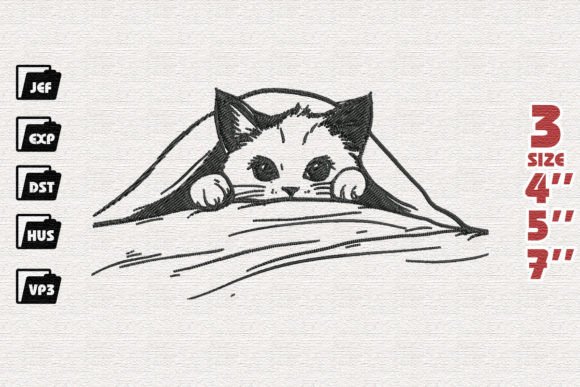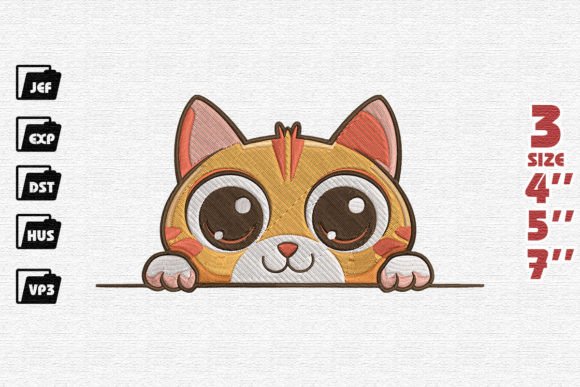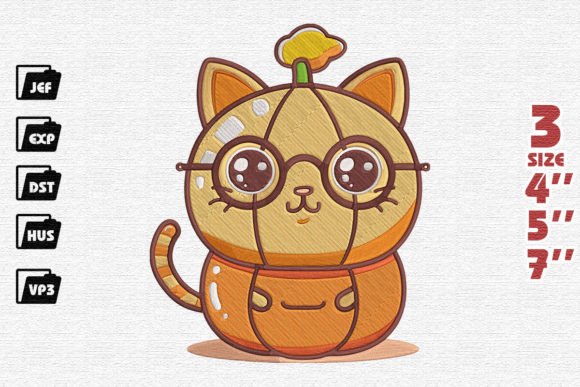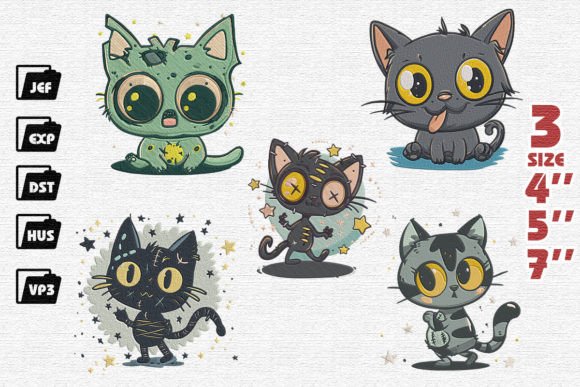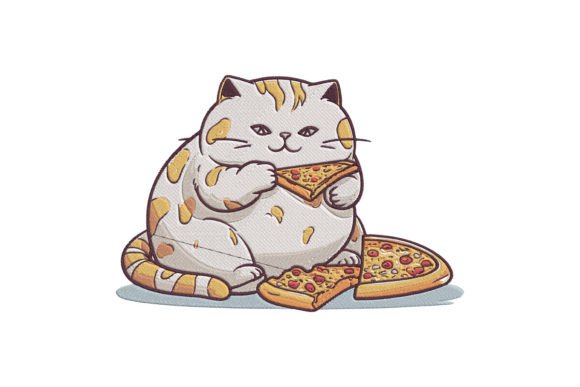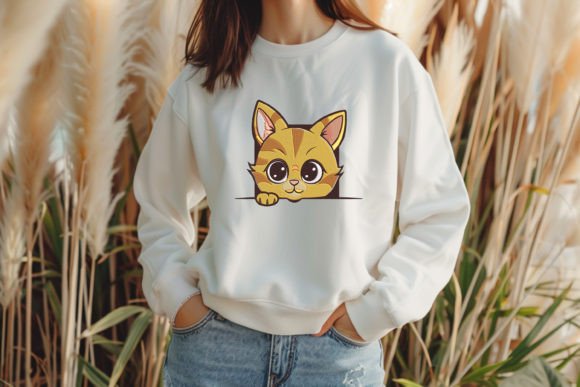
Cute Baby Cat Embroidery
First Impression: Soft Charm Meets Craft Fair Appeal
As an embroidery designer who’s prepped over 200 craft fair booths—and watched which designs stop foot traffic—I opened Cute Baby Cat Embroidery expecting sweetness, and got it: round cheeks, simplified ears, gentle curves, and a quiet sense of playfulness. It reads as soft, modern, and gently nostalgic—not cartoonish or overly cutesy, not minimalist to the point of abstraction. That balance is gold for handmade markets. Customers scanning a crowded table don’t pause for complex narratives—they pause for warmth, clarity, and instant emotional resonance. Cute Baby Cat Embroidery delivers that in under two seconds.
Where It Shines: Real-World Craft Fair Product Pairings
This design isn’t just versatile—it’s strategically adaptable. Here’s how it performs across your most reliable small shop products:
- Tote bag design: Works beautifully centered on the front panel (medium size) or as a subtle accent near the handle seam. Its compact shape avoids distortion on canvas folds and reads clearly from 6 feet away.
- Apron embroidery: Ideal above the pocket or centered on the bib—small enough to avoid overwhelming the wearer but large enough to feel intentional and handcrafted.
- Tea towel embroidery: A standout on linen-cotton blends. The soft lines soften nicely against textured weaves, and the design doesn’t compete with food stains or kitchen clutter—it invites touch instead.
- Embroidered patch: Highly effective at 2.5"–3". Clean edges hold up through iron-on application and laundering. Great for bundling with pins or stitch kits as a low-cost impulse buy.
- Fabric pouch & pillow cover: Scales well without losing charm. On a 9" x 9" pillow cover, it feels like a curated detail—not filler.
- Caps & market bags: Use with caution. Curved surfaces compress fine details; test placement and hoop stability first. Best as a clean, medium-sized motif on the front panel—not the curve of a cap bill.
What Makes It Sell—Beyond Cuteness
Cute Baby Cat Embroidery works because it supports customer storytelling. Buyers don’t just purchase a cat—they buy “the one I gave my sister after her baby shower,” “the towel I use every morning to start softly,” or “the patch that makes my denim jacket feel like *me*.” That emotional hook elevates it from decoration to keepsake. In booth displays, it adds visual rhythm without shouting—pairing seamlessly with neutral linens, wood tags, and hand-stamped packaging. It also reinforces brand consistency for Etsy sellers: if your shop leans into gentle, nature-adjacent, or nurturing themes, this design strengthens that voice without requiring rebranding.
Practical Production Notes Every Embroiderer Should Check
Before cutting fabric or loading hoops, treat Cute Baby Cat Embroidery like a new team member—introduce it to your workflow deliberately:
- Test on scrap fabric first, especially textured towels or thick cottons—the description says “embellish your fabrics,” but dense stitch areas may pucker without proper cutaway stabilizer.
- Check thread contrast carefully. On dark fabric, light threads can vanish unless you add underlay or adjust density. Conversely, white-on-cream can read as flat without tonal variation.
- Review spacing and stitch density. If the design includes tiny facial details (e.g., whiskers or pupils), confirm they’re legible at your intended size—especially for tea towel or patch applications where clarity = perceived quality.
- Confirm hoop size compatibility. A design that requires a 5" x 7" hoop won’t fit many standard cap frames or small pouches without resizing—and resizing risks distortion.
- Create at least one real mockup before batch production. A photo of Cute Baby Cat Embroidery stitched on your actual tote fabric tells you more than any digital preview.
- Compare fabric colors side-by-side. What reads as “soft gray” on screen may shift to lavender or taupe in natural light—critical for cohesive booth displays.
- Verify commercial licensing. Since this is a machine embroidery design, confirm whether the digital embroidery file permits resale of finished products—this is non-negotiable for craft fair sellers and Etsy sellers.
Online & Offline Visibility: How It Performs Beyond the Booth
Cute Baby Cat Embroidery photographs exceptionally well—its rounded shapes and balanced negative space translate cleanly to smartphone screens and printable mockups. For Etsy listings, it avoids common pitfalls: no tiny lettering to blur, no high-contrast gradients that band in JPEGs, and no elements so fine they disappear in thumbnail view. That means better click-through rates and fewer “Is this clear in person?” questions. As a digital embroidery file, it’s also highly repeatable for batch production—no color blending tricks or multi-step alignment needed. That consistency builds trust: customers return when they know your embroidered patches, aprons, and pouches all carry the same confident, hand-finished look.
Careful-Use Considerations for Maximum Impact
A few smart limits keep Cute Baby Cat Embroidery looking premium:
- Avoid scaling below 1.75" — facial features and outline integrity weaken.
- Don’t place it directly over seams or heavy fabric texture (like terry cloth loops) without extra stabilizer—stitch density can snag or distort.
- On curved surfaces (caps, curved market bags), prioritize center-front placement and allow 1/8" breathing room around the design edge.
- Dark fabric demands careful thread selection—consider matte poly or rayon for depth, not just brightness.
- If used in a series (e.g., cat + bunny + fox), ensure consistent sizing and stitch weight so the collection feels intentional, not pieced together.
Final Thought: A Quiet Workhorse for Handmade Sellers
Cute Baby Cat Embroidery isn’t flashy—but that’s its strength. In a sea of bold fonts and maximalist motifs, it stands out by being thoughtfully restrained, emotionally warm, and production-smart. It fits naturally into homes, kitchens, nurseries, and gift tables—not as a statement, but as a soft, steady presence. For craft fair sellers, Etsy sellers, and boutique makers building a catalog of trusted handmade products, this is the kind of embroidery file that earns repeat customers, fills gift boxes, and quietly becomes a signature. Just remember: let it breathe, test it early, and always pair it with intention—not just fabric.