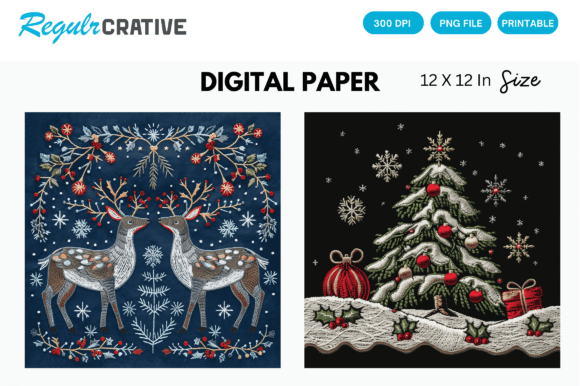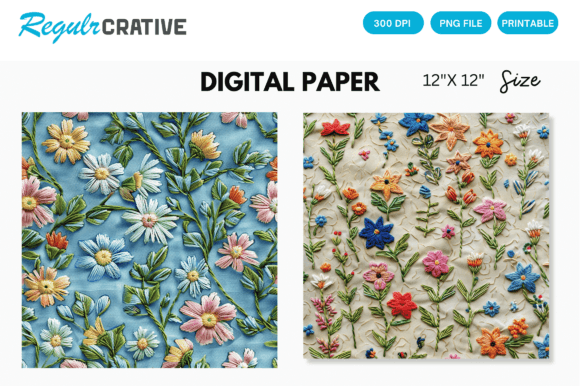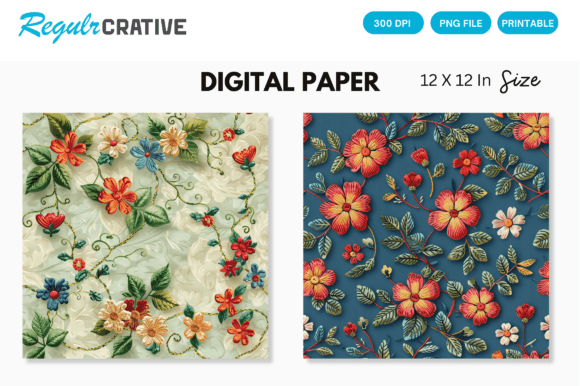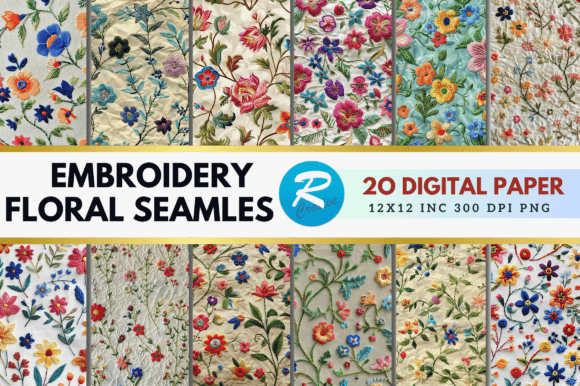
Christmas Tree Embroidery Digital Paper
A Craft Fair Designer’s First Look: Festive, Floral, and Booth-Ready
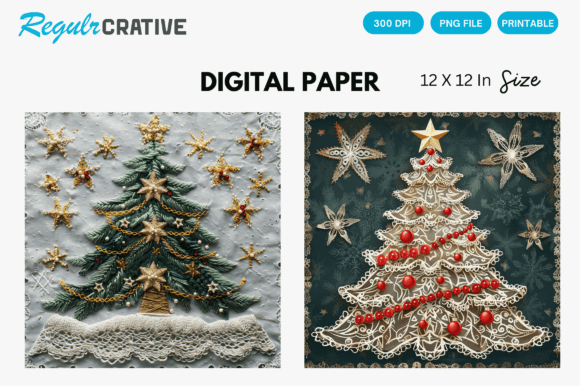
As an embroidery designer who’s packed up 47 craft fairs—and counted every unsold tote bag—I opened Christmas Tree Embroidery Digital Paper expecting holiday cliché. Instead, I found something quietly confident: a design rooted in classic floral patterns but scaled and stylized for modern handmade markets. It doesn’t shout “CHRISTMAS!”—it leans into warmth, tradition, and subtle sophistication. That’s gold at a crowded booth. Customers pause for elegance, not noise. This isn’t kitschy or cartoonish—it reads as festive yet refined, with soft botanical rhythm around the tree shape. Think farmhouse charm meets boutique gifting—not big-box cheer.
Where It Shines: Real Products, Real Buyers
On tote bag designs, Christmas Tree Embroidery Digital Paper works best as a centered, medium-scale motif (6–8 inches tall) on natural canvas or oat linen. It reads clearly from three feet away—critical when shoppers are scanning 20+ booths in under 90 seconds. As apron embroidery, it anchors beautifully above the pocket without overwhelming the bib. On tea towel embroidery, its floral framing softens the rigidity of woven cotton—especially when stitched in ecru or sage thread on cream towels. It also elevates embroidered patches: clean outlines and balanced negative space mean crisp edges even after washing. For pillow covers and fabric pouches, it adds heirloom weight—less “seasonal decoration,” more “intentional heirloom.” And yes—it converts well on caps, but only if placed front-and-center on structured, low-crown styles (avoid curved back panels).
What Makes It Sell—Beyond the Stitch
This isn’t just another machine embroidery design. Its strength lies in visual breathing room. Unlike dense all-over motifs, Christmas Tree Embroidery Digital Paper uses openwork and intentional gaps—making it forgiving on textured fabrics and forgiving to photograph. For Etsy sellers, that means stronger printable mockups and faster listing turnaround. For small shop products, it scales cleanly across sizes: same file works for a 3-inch patch and an 11-inch pillow cover without re-digitizing. And because it lives in the Backgrounds category—but functions like a Graphics asset—it gives makers flexibility: use it as a full-block motif, crop a single branch for corner accents, or layer it behind monogrammed initials.
Careful-Use Notes: Protect Your Production Time
- Dense stitch areas: The base of the tree and inner floral swirls pack tighter satin and fill stitches—test on your heaviest fabric first. Avoid doubling up on thick denim or quilted market bags unless you’ve confirmed stabilizer hold.
- Tiny details: Delicate leaf tips and vine connectors may blur on terry cloth towels or brushed cotton. Skip those surfaces—or enlarge by 10% before stitching.
- Curved cap surfaces: The design’s symmetry helps, but avoid placing near seams or deep curves. Stick to flat front panels.
- Dark fabric: This design relies on tonal contrast within its floral layers. On black or navy, verify thread colors match your brand palette—ecru won’t read. Opt for matte metallic or heathered variegated threads instead.
- Small sizes: Below 3.5 inches wide, the inner structure starts to collapse. Use it as a focal—not a border—at tiny scales.
Booth Impact & Buyer Psychology
In person, Christmas Tree Embroidery Digital Paper performs like a quiet magnet. It doesn’t compete with glitter or neon—it invites closer inspection. That’s how you get the “Oh, tell me about this!” moment at your table. When stitched on a linen apron beside hand-poured candles and ceramic mugs, it signals handmade quality and curated intention. It strengthens brand consistency for makers who blend holiday with year-round aesthetics—no jarring seasonal whiplash. And because it feels premium (not disposable), customers assign higher perceived value—even before you quote a price. That translates directly to stronger booth display strength and longer dwell time.
Embroidery Designer’s Must-Do Checklist
- Test on scrap fabric—same weight, same finish, same dye lot as your final product.
- Check thread contrast across 3 fabric colors: light, mid-tone, and dark.
- Review spacing between elements—ensure no floating stems or isolated leaves detach during wear.
- Confirm hoop size compatibility before batching—don’t assume it fits your standard 5x7.
- Inspect stitch density visually: look for puckering risk in tight clusters.
- Use the right stabilizer—tear-away for stable wovens, cut-away for knits or stretchy pouch fabrics.
- Create at least one real mockup—not digital, not printed—actual stitched, washed, and pressed.
- Compare fabric colors side-by-side under both daylight and booth lighting.
- Confirm commercial licensing before selling finished products—this is non-negotiable for commercial embroidery and digital embroidery file resellers.
Final Thought: A Design That Sells While You Sleep
Christmas Tree Embroidery Digital Paper isn’t flashy—but it’s reliable, versatile, and deeply aligned with what today’s handmade buyers respond to: authenticity, texture, and timeless holiday warmth. It supports craft fair product storytelling without demanding attention. It lifts handmade product credibility while staying production-friendly. And because it sits in the Backgrounds category yet behaves like a flexible Graphics asset, it multiplies your design assets without multiplying your workload. In short: it’s the kind of digital embroidery file that earns repeat orders, not returns.